What is the best dissolved air flotation system for a food processing plant?
The best dissolved air flotation (DAF) system for a food plant is the one engineered around your worst-case wastewater, not the one with the largest capacity rating on a datasheet. Two plants with the same flow can need very different systems if one fries product and the other washes vegetables. A unit that performs on an average day can fail at harvest peak or right after a CIP cycle.
No single model is best for every plant. The quality of the purchase comes down to process: how the system is sized, how the chemistry is chosen, what the supplier guarantees in writing, and who supports it afterward. The eight steps below follow the order in which you will face those decisions.
The short version
- Match the system format to your flow, but treat flow band as a starting point only.
- Size to peak flow and worst-case loading, never to the average.
- Require jar testing on your own wastewater before accepting a price.
- Get the performance guarantee in writing, with test conditions defined.
- Compare operating cost, float handling, and support, not just equipment price.
Step 1: Match the system format to your flow
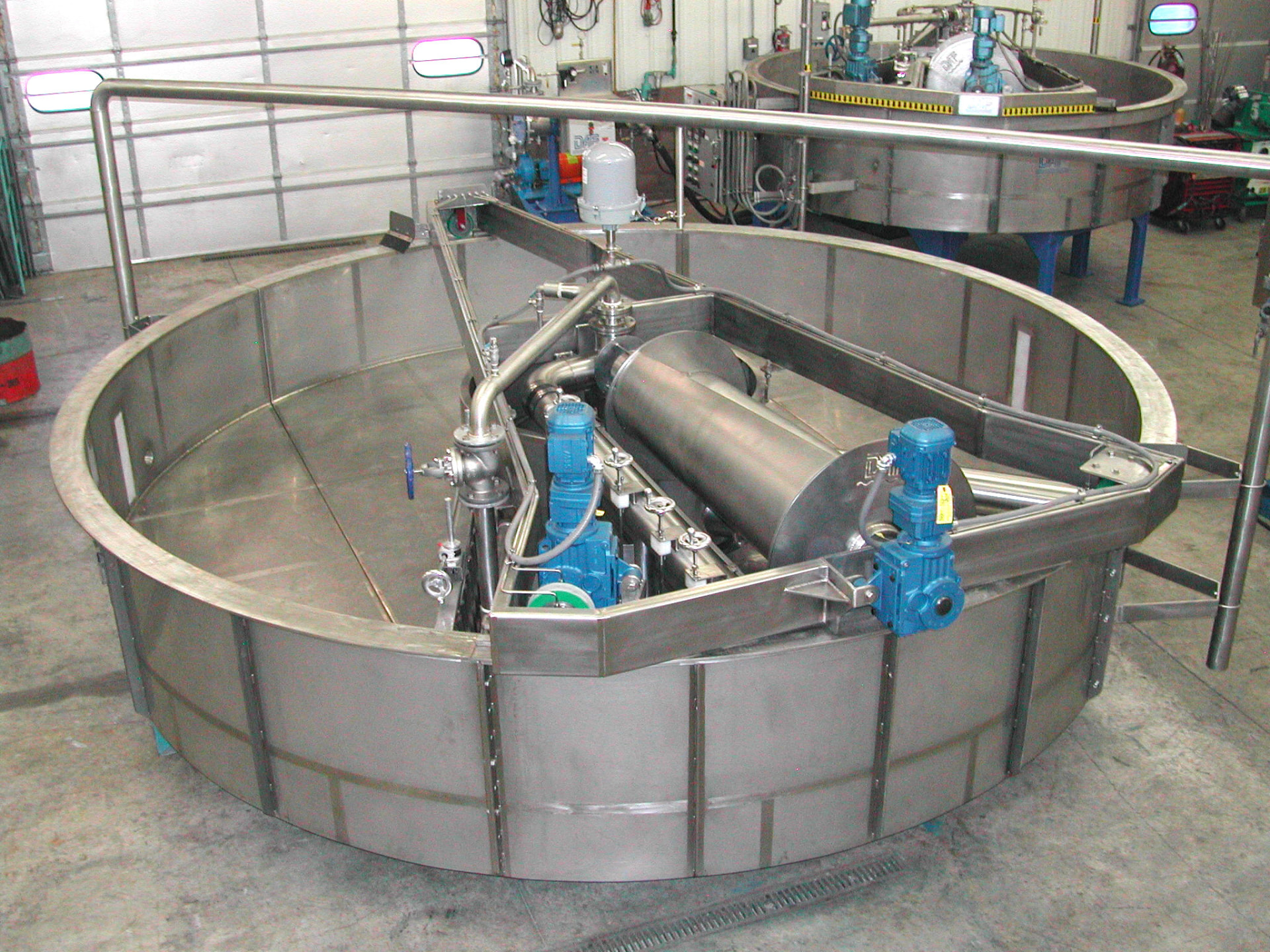
DAF equipment falls into a few formats, and flow is the quickest way to narrow them. The table shows how those formats line up with flow bands, using the DAF Corporation lineup as the example. Use it to frame the conversation, not to pick a model.
| Flow band | System format | Typical fit |
|---|---|---|
| Roughly 20–300 GPM | Compact, skid-mounted package, factory-tested | Smaller processors, specialty food plants, pretreatment ahead of a sewer connection, pilot installations |
| Roughly 300–2,000 GPM | Fully configurable tank, skimmer, and chemical feed | Mid-size food, dairy, and beverage plants |
| Roughly 2,000–11,000 GPM | Multi-zone design with redundant pressurization | Large food processing complexes, rendering, 24/7 operations, demanding permits |
| Any flow, unusual conditions | Custom tank geometry or multi-train layout | High solids loading, multi-stage clarification, tight footprint, site-specific structural needs |
Flow bands are approximate and overlap. Peak flow, solids loading, and permit limits decide the final selection.
Round and rectangular clarifiers also differ in retention time, footprint, and maintenance. Our comparison of round vs. rectangular DAF clarifiers covers that choice, and the FC Maximizer installation sizes page lists dimensions and capacities model by model. The full lineup is on the DAF systems page.
Step 2: Size to the worst day, not the average day
Food plant wastewater is rarely steady. Flow and strength move with production schedules, product changeovers, sanitation, and seasons. A supplier who sizes to your average is setting you up for the one day a year that matters most. Before you request quotes, collect the data a supplier needs to size honestly:
- Average and peak hourly flow, and how many hours a day you discharge
- How flow changes with CIP, shift changes, product changeovers, and harvest or seasonal peaks
- Fats, oils, and grease, suspended solids, and BOD or COD, measured on your worst-case day
- pH and temperature swings, and which cleaning chemicals reach the drain
- Your discharge permit limits or sewer surcharge thresholds
- Available footprint, utilities, and whether the unit goes indoors or outdoors
What counts as a typical range depends on what you make. See the contaminant profiles on our food processing, dairy, and meat and poultry pages for a sense of what to expect, then replace those ranges with your own measurements.
Step 3: Require lab analysis and jar testing before a price
DAF performance depends on chemistry as much as hardware. Coagulant and flocculant choice, dose, and pH set whether emulsified fat and fine solids form floc the bubbles can lift. Whey proteins, for example, interfere with standard coagulant programs, and frying oils behave differently from peel and starch solids. Jar testing on a real sample is how that chemistry is selected.
A supplier that prices from a catalog is guessing at the chemistry. Ask for jar-test results, the chemical program they selected, and the expected dose. Our how DAF works page explains the coagulation and micro-bubble steps in more detail.
Step 4: Get the performance guarantee in writing
Datasheet removal percentages describe typical results, not your plant. A useful guarantee names the influent conditions it applies to, the effluent limits for TSS and FOG (and BOD where relevant), the sampling point and method, and the remedy if the system misses. Define these in the contract before you sign.
Step 5: Compare operating cost, not just equipment price
A lower equipment price can be the more expensive system over its life. Chemical consumption, power, float volume and hauling, operator time, and wear parts all recur every year. Ask each supplier for estimates of coagulant and polymer use, power draw, and float production for your design flow, and put them side by side. If one quote leaves these out, ask for them before you compare totals.
Step 6: Check food-plant construction and maintainability
Food plants sanitize aggressively and run long hours, so the construction details matter. Confirm the materials of construction (304 stainless steel or carbon steel, and where each is used), how the equipment tolerates washdown and cleaning chemicals, whether the skimmer and other wear parts are accessible, and what controls come standard. Decide whether you need PLC control alone or SCADA integration with the rest of the plant.
Also ask what sits upstream. Screening and equalization often decide whether a DAF runs smoothly through production swings, and they should be in the proposal or clearly excluded from it.
Step 7: Plan for the float before you buy
Every DAF produces a float layer of removed fats and solids, and someone has to handle it. Depending on the product and local options, float can often be rendered, digested, land-applied, or hauled. Ask for the expected float solids and volume, confirm the handling route you plan to use, and include the disposal cost in your operating budget.
Step 8: Evaluate installation, startup, and support
Equipment that is delivered but not commissioned properly will underperform. Confirm who handles site preparation, rigging, piping, chemical feed integration, startup, and operator training. Ask about spare parts availability, technical support after commissioning, and whether a service agreement is available. Finally, request a dated schedule from order to commissioning. Fabrication of a DAF Corp system typically takes 6 to 12 weeks, depending on unit size and metallurgy (see our process overview), and your schedule should be just as explicit.
Custom-engineered or packaged: which should a food plant buy?
A packaged, standard-size unit is the faster and usually lower-cost path when your wastewater is stable, the flow is modest, and the chemistry is simple. Custom engineering earns its cost when flow and strength swing widely, fat loads are heavy, the footprint is awkward, or the permit is demanding. It adds design time up front and a longer lead time.
Most food plants end up in the middle: a standard model size configured for their chemistry, recycle ratio, controls, and materials. Ask any supplier which parts of their offer are standard and which are engineered for your site, and what each costs.
Compare supplier quotes side by side
Put every quote into the same grid. The right column lists what should make you ask for clarification.
| Item | A complete quote states | Ask questions if you see |
|---|---|---|
| Design basis | Peak flow, loads, and operating hours written out | A capacity number with no stated assumptions |
| Lab work | Jar testing on your sample and the chemistry it selected | Chemistry assumed from a catalog |
| Guarantee | Influent conditions, effluent targets, sampling method, and remedy if missed | “Typical removal” ranges only |
| Operating cost | Estimated chemical use, power, and float volume | Equipment price only |
| Float handling | Expected float solids and a handling path | Left to the buyer |
| Construction and controls | Materials, washdown access, PLC or SCADA scope | Unspecified materials and controls |
| Installation and training | Who installs, starts up, and trains operators | Delivery only, with the rest unpriced |
| Service and parts | Support terms, spare parts, and a named contact | No written terms |
When a DAF alone is not enough
DAF is a pretreatment and clarification step. If your limits require deep BOD, nitrogen, or phosphorus removal, or you discharge directly to a receiving water, plan for biological or other treatment downstream. A well-designed DAF still earns its place there by removing the fat and solids that cause foaming and upsets in biological systems. For many food plants that discharge to a municipal sewer, DAF alone delivers the surcharge and grease compliance they need. Your permit and your lab data decide which case you are in.
Where DAF Corporation fits
DAF Corporation has designed and built DAF clarifiers in Kaukauna, Wisconsin since 2000. Our FC Maximizer and Unimax clarifiers cover 20 to 11,000 GPM, and our AMT micro-bubble systems handle pilot and retrofit flows down to 5 GPM. Every project starts with laboratory analysis and jar testing of your wastewater, and every system is fabricated in the USA, factory-tested, installed, started up, and supported by our team. If you are comparing suppliers, use the checklist above on our proposal too.
Frequently Asked Questions
Do I need a custom DAF system for a food processing plant?
Not always. A standard model size works when the wastewater is stable and the flow is modest. Custom engineering matters most when flow swings with production or harvest, when fat and oil loads are high, or when CIP cycles shift pH and strength. Most food plant purchases land in between: a standard model size configured for your chemistry, recycle, controls, and materials.
What flow rate should I size a food plant DAF for?
Size for peak hourly flow, including CIP surges and seasonal production, not for the daily average. A system sized to the average can overload on the worst day, which is the day your discharge permit is most at risk. Equalization ahead of the DAF can reduce the peak the clarifier has to carry.
Will a DAF system alone meet my discharge permit?
It depends on the limits. DAF removes fats, oils, grease, and suspended solids very well, and for many plants discharging to a municipal sewer that is enough to cut surcharges and meet grease limits. Dissolved sugars, starches, and lactose pass through any clarifier, so plants with tight BOD, nitrogen, or phosphorus limits typically use DAF as pretreatment ahead of a biological system.
What should I send a DAF supplier to get an accurate quote?
A sample of your worst-case wastewater, your average and peak flow, your operating schedule, your discharge permit limits, and a description of your products and cleaning chemicals. A supplier that quotes without a sample is working from assumptions.
How much does a DAF system for a food plant cost?
Cost depends on flow, materials of construction, controls, chemical feed, and installation scope, so we do not publish a price range. A realistic budget follows lab analysis of your wastewater. When you compare quotes, compare operating cost too: chemicals, power, float handling, and maintenance.
How long does it take to get a DAF system?
Fabrication of a DAF Corp system typically runs 6 to 12 weeks, depending on unit size and metallurgy, followed by delivery and installation. Ask every supplier for a dated schedule from order to commissioning, and confirm what is included.
This guide is general orientation for preliminary decisions. Final sizing, chemistry, and performance depend on your wastewater, flows, and permit, and should be confirmed through laboratory analysis and, where possible, pilot testing.
Comparing DAF systems for your plant? Send us a sample of your worst-case wastewater and your discharge limits.
Talk to a DAF Corporation engineer